

These are not necessarily the movies I consider "greatest;" they're closer to being personal favorites I would be most compelled to watch at a given moment. I've ordered them roughly by preference, though looking at the list it feels rather arbitrary...and of course, it could change in a minute or two.
UPDATE 2016: From 2012 to 2016 I ran a series covering every one of these films from #100 through #1. This list now doubles as a directory for all of those entries - click on the title to read each one.

(1966/France/dir. Jean-Luc Godard)
I just respond to the style here above all else - it's so restrained yet burning with intense energy. The movie is also a great example of the raw reality of documentary infiltrating a fictional story. And Jean-Pierre Leaud's internal monologue in the cinema is one of my favorite movie speeches ever.
.png)
(1962/UK/dir. David Lean)
Although it's legendary as spectacle, the power of the movie lies in its fusion of character with landscape - geography as psychology. A perverse and violent adventure epic.

(1958/USA/dir. Alfred Hitchcock)
Simultaneously raw and elegant, this is Hollywood's masterpiece. Though I've seen audiences laugh along with it, it's startling for me to see it as at all comic (though like all Hitches, it has a sense of humor). The tragic, dreamlike aura seems overpowering.

(1943/Denmark/dir. Carl Theodor Dreyer)
This is a spiritual film to its core, even (especially) while exposing the crimes of organized religion. We are with our protagonist, but Dreyer doesn't let her off the hook either, and the conclusion could be seen as a reverse-miracle version of Ordet: the dark side of having enough faith.

(1963/Iran/dir. Forough Farrokhzad)
An intensely moving portrait of a leper colony; the most compassionate movie I've ever seen - at once a documentary and a poem, a physical survey and a subjective expression. The cinematography and editing are incredibly beautiful - not in a subtle, observational way but overwhelmingly so.

(1988 - 1994/UK/dir. the Quay brothers)
The Quays are among my favorite filmmakers, with their eerie and penetrating stop-motion dreamscapes. Narrowing down one favorite is hard. This set of films, incorporating fairy-tale and erotic imagery into experimental shorts and music videos, is what I return to most often.

(1970/USA/dir. the Maysles brothers & Charlotte Zwerin)
Maybe the greatest documentary feature - at once a perfect portrait of a zeitgeist, a canny examination of celebrity, and a meta-examination of the form itself. A truly visceral experience you'll find yourself thinking about later.

(1928/France/dir. Carl Theodor Dreyer)
From the first second I'm hooked; Passion is as compulsively watchable a film as was ever created. Falconetti's otherworldly gaze and Dreyer's humanist and spiritual sensibility rivet one to the screen. A masterpiece of camera craft, editing, and performance - all of which seem inseparable.

(1974/USA/dir. Francis Ford Coppola)
A shattered and shattering family portrait, with a moment that still gives me goosebumps: Michael Corleone embracing his brother while staring coldly in the distance, with ominous intensity. Probably the great American epic, with or without its predecessor.

(1946/USA/dir. Frank Capra)
The story of America between the wars, mythologized but far from sugarcoated. Happy ending or no, this is a very dark national portrait but one with a deeply moral core, a morality of personal responsibility and instinctive empathy with the underdog.

11. Citizen Kane
(1941/USA/dir. Orson Welles)
Another national portrait, this one covering fifty years instead of twenty-five, and focused on the exceptional and lonely individual rather than the common man and his community. Also a joyride through the medium's possibilities and an anthology of divergent points of view. Brilliant.

(1944/USA/dir. Gjon Mili)
This performance short is the greatest "musical" ever made - a brilliantly orchestrated and executed jam session (staged, of course, but full of spirit) with everything you could ask for from music onscreen: dancing, singing, playing, that ineffable "cool." What a gem.

13. The Mirror
(1974/USSR/dir. Andrei Tarkovsky)
I haven't seen this one for a while, but it lingers in my memory like a powerful, half-remembered dream. A mesmerizing fusion of documentary, personal memoir, fiction, experimentation, and found footage, all of cinema's possibilities are present in one magical work.
14. Taxi Driver
(1976/USA/dir. Martin Scorsese)
One of the great subjective experiences ever put on celluloid. Scorsese, Schrader, and DeNiro make Travis Bickle at once the quintessential loser and an icon tapping into American myths of the romantic outsider, whether cowboy or Indian (see mohawk).

15. The Third Man
(1949/UK/dir. Carol Reed)
Three great scenes and no bad scenes - actually more than three great scenes, but the three best are so good they outshine everything else: a magical appearance in a doorway, a little speech about a cuckoo clock, and an achingly gorgeous long walk into the future.
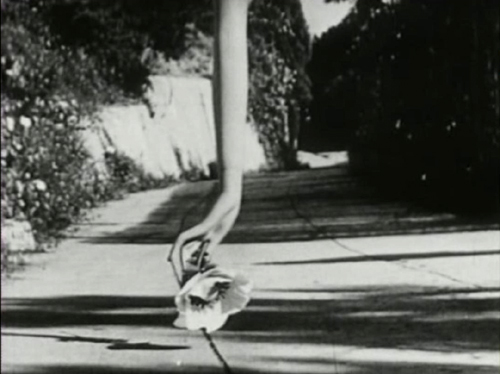
(1943/USA/dir. Maya Deren & Alexander Hammid)
A nightmare all the more frightening for being photographed in the light of day, and for having few jumpy moments of shock, just an overall lingering feeling of dread. However, the revelation of the mirror-face still causes a jolt, and the doom-laden conclusion anticipates Mulholland Drive sixty years later.

17. Star Wars
(1977/USA/dir. George Lucas)
Never before had the sheer bliss of kids' play been captured with such technical invention or attention to colorful detail. This is, in a sense, the only blockbuster; all others are superfluous.

(1957/Italy/dir. Federico Fellini)
For my money, the warmest and most engaging Fellini, crackling with a wise romanticism and a sad realism, at once honest and magical. The sad, struggling, yet resilient Cabiria makes a poignant counterpoint to the cool cynicism of La Dolce Vita's Marcello.

(1972/USA/dir. Francis Ford Coppola)
The storytelling chops of pulp meet the moving pathos of great popular art, and an authentic American masterpiece is born. Fusing unblinking graphic content with a warmly romantic sense of style, Don Vito was right - I can't refuse.

(2001/USA/dir. David Lynch)
Works both as a surreal excursion into the inexplicably uncanny, and a metaphorical dream dealing in rawly dissociated and displaced responses to a numbly painful reality. As always, Lynch turns subconscious currents into larger-than-life myth.

(1954/USA/dir. Elia Kazan)
Precisely the type of acting I find most appealing - not necessarily "realistic" (there's something heightened and playful about it) yet so natural, tapping into the emotional reality of a scene, repressing it, and letting it flow out of all the cracks in the facade. The Brando-Steiger scene is great but the tender romance with Eva Marie Saint is the heart of the picture.

(1960/Sweden/dir. Ingmar Bergman)
Bergman's most cinematic film yet, a movie that moves through silence, space, and suggestion, evoking a medieval tempo and a primeval sensibility. A heartbreaking portrayal of doomed innocence and brutal revenge; Bergman dismissed it as "too Kurosawa" - if so, it's my favorite Kurosawa.

(1969/France/dir. Eric Rohmer)
Francoise Fabian, mature, friendly, flirtatious, is irresistible, though Jean-Louis Trintignant tries his hardest to resist. A movie that perfectly captures the pleasurable passage of time in good company, while underpinning this joie de vivre with a compelling sense of moral dilemma.

(1939/USA/dir. John Ford)
Though it's difficult to choose between this and The Searchers as my favorite Ford, I lean towards Young Mr. Lincoln for its sheer surprise: such resonance from such simplicity. And it perfectly captures the ambiguity between down-to-earth charisma and canny demagoguery.

(1962/Italy/dir. Pier Paolo Pasolini)
Contains what may be the greatest cut in cinema history. A hysterical mother leans against a window, barely restrained from leaping out, and the shaky frame is abruptly replaced by an ominously imposing cityscape. Mamma vs. Roma, and Roma wins.

(1964 - present/UK/dir. Michael Apted)
Easily the most fascinating movies ever created, because they capture a portion of that mysterious, almost alchemical process, whereby time passes and people age. At seven-year intervals, we watch a generation grow up and adapt themselves to society and circumstances.

(1956/USA/dir. John Ford)
Another archetypal American movie, one that seems to capture a certain essence of the American character - it's there in Ford's and John Wayne's instinctive brutality and equally instinctive grace. Muted poetry, pointed prose, incredible cinema.

(1965/Italy/dir. Marco Bellochio)
Savage and sensitive, this quintessential sixties film is at once black comedy, biting social satire, violent horror, and pure sensory experience. Subversive and romantic in its roving cinematography and jagged editing. And Paolo Pitagora - oh baby...

(1990/USA/dir. Martin Scorsese)
One of the most sheerly enjoyable films of all time, eminently re-watchable, at least if you can stomach the endless stream of violence, profanity, and drugs. Full of hilarious little details and frightening moments...no wonder it was so influential.

(1943/USA/dir. Tex Avery)
Another film that could be watched in a loop, and it's easy to do because it's so short and sweet. A horny exaltation of the fast-paced forties life which couldn't be represented in live action, this is a hilarious portrait of sexual frustration and an insanely clever fractured fairy tale.

(1952/USA/dir. Stanley Donen & Gene Kelly)
Sheer pleasure - not only highly imaginative song and dance, but a story that would make this one of the best comedies of all time, even if wasn't a musical to boot. The hilarious "Dueling Cavalier" fiasco could stand alone as a brilliantly subversive experimental short..."Yes, yes, yes! No, nooo, nooooo...."

(1969/USA/dir. Dennis Hopper)
The movie doesn't get enough credit for its sense of humor, its raw power, and the impressionistic flow of its images and sounds - if there's a more kinetic use of cutting and pop music this side of Scorsese, I don't know it. And Nicholson's hilarious.

(1949/USA/dir. Raoul Walsh)
A middle-aged Cagney turns in one of his most iconic performances as a ruthless killer with a mother complex, an itchy trigger finger, and a penchant for temper tantrums. The rugged scenery adds to the atmosphere and the explosive finale is just right...what a way to go.

(1964/France/dir. Jean-Luc Godard)
Godard's greatest tribute to Hollywood (and acknowledgement of the gap between its aura and his own style). A thriller with one of the great musical moments and a number of winking western references. A girl and a gun - enough for a movie, if not (as it turns out) a successful heist.

(1929/USSR/dir. Dziga Vertov)
Sheer play, making every possible use of the camera and editing shears. Is it documentary? Fiction? Experimental? Home movie? All of the above, and pure movie through-and-through. As much, if not more, a sensory experience as an intellectual one.

(1925/USA/dir. Charlie Chaplin)
City Lights is the most iconic and perhaps perfect Chaplin, but this is the one that makes me laugh the hardest, and most involves me - who can't sympathize with the Tramp's humiliation at the mittened hands of Georgia Hale? Starvation, cannibalism and unrequited love have never been funnier.

(1933/USA/ani. Roland Crandall)
Forget the Disney version; this is the fairest of them all. Stuffed to the gills with subversive imagery, clever details, and hilarious gags (hand-animated by Crandall over 6 months), this Betty Boop adaptation sends Grimm packing in favor of the marvelously sustained, rotoscoped brilliance of Cab Calloway.

(1983/USA/dir. Brian De Palma)
Raw, garish, and trashy, perfectly capturing the eighties as a blood-red, cocaine-white, Miami-blue visual feast. DePalma, Stone, and Pacino are in (over-the-)top form.

(1996/France/dir. Michel Gondry)
A music video that can stand with the great impressionistic shorts of all time. Gondry, through his trademark elaborate simplicity, evokes at once the sensations of dreaming, playing video games, and travelling through a strange landscape. Unforgettable images paired with Bjork's evocative soundscape.

(1966/Czechoslovakia/dir. Vera Chytilova)
Wildly anarchic, here is a movie that captures the sixties in all its manic energy: playful, destructive, restless, apocalyptic. Chytilova claimed to be condemning the film's protagonists, perhaps to avoid official censorship (no such luck), but the stylistic bravado of this Czech classic is a gas.

(1961/Sweden/dir. Ingmar Bergman)
Perfectly captures the melancholy, unsettling beauty of the isolated seashore as well as the tantalizing, terrifying madness beckoning on the horizon and whispering through the cracks of the wallpaper. Harriet Andersson is both hyperreal and ethereal, and the final revelation carries a horrific punch.

(1973/France/dir. Jean Eustache)
Talk, talk, talk, and cinematic to its core. The nervy energy and youthful restlessness of the sixties meets the ennui and world-weary disappointment of the seventies. An intellectual, sexual, and social exploration, this is the chamber drama as epic.

(1968/USA/dir. Roman Polanski)
Funny and terrifying, no movie better captures the claustrophobic sense of paranoia - because we have no reason not to believe "all of them witches." Like Taxi Driver (even more so) a brilliant exercise in pure subjectivity. The ending is creepily hilarious.

(1971/France/dir. Jacques Rivette & Suzanne Schiffman)
Another exercise in paranoia, though this time it runs so deep you don't even know what you're paranoid about. There's no story to hook into exactly, just a relaxed yet alluring mood, an intriguing cast of characters and a series of immersive moments. One hell of an experience.

(1974/USA/dir. Roman Polanski)
No director better captures the frank charisma and brute power of evil than Roman Polanski. As Noah Cross sneers at justice, all the world seems a cruel, mocking Chinatown.

(1998/USA/dir. the Coen brothers)
Looking for a lighter L.A. neo-noir? Already having sauntered from theatrical flop to cult favorite, Lebowski may be on its way to even greater glory - as both the Coens' masterpiece and one of the most brilliant comedies ever crafted. Made me laugh to beat the band.

(1992/USA/dir. David Lynch)
Speaking of flops, this was practically chased out of theaters by a lynch mob, less than two years after the TV series had been a smash. Too bad, as it both delivers on and utterly transcends the show's promise. One of the most upsetting and riveting movies ever made.

(1973/USA/dir. Sam Peckinpah)
The most recent addition to this list - I only saw it a week ago, but boy was it worth the wait. The scene at left: Wow. Screw the Bomb; this is Slim Pickens' greatest moment.

(1944/USA/dir. Edward Dmytryk)
The Stagecoach of noirs - not necessarily in terms of influence, certainly not for star power (Dick Powell is excellent, but Bogie - if anyone - was noir's John Wayne) but for its universe of archetypes. What a rich atmosphere, what an intricate plot, what a tough, streetwise sensibility! What a movie.

(1978/UK/dir. Peter Greenaway)
Wickedly bizarre and endlessly amusing and imaginative, this is one of the great avant-garde films. A guided tour through a gallery becomes some sort of metaphysical spirit quest, where ornithology, bureaucracy, and surrealism tangle, under the watchful eye of Tulse Luper.

(1940/USA/prod. Walt Disney)
Going beyond the iconic mesmerism of Snow White, Disney and his animators create a rich world and pack the frame with character and invention. The imaginatively creepy Pleasure Island foreshadows the Disney Corporation's sinister evolution, but this time the magic still wins out.

(1973/USA/dir. Martin Scorsese)
The opening montage, with its fusion of home movies, filmmaking bravado, and the yearning beat and vocals of pop music - unbelievably brilliant. Scorsese knows, in his bones, how to craft kinetic cinema, and here grit and opera combust in glorious fashion.

(1962/Italy/dir. Michelangelo Antonioni)
This film has some sort of loose plot, but what it's really about is the strangeness of that water tower, the delicate shudders of those slender flagpoles, and Monica Vitti's gorgeous gaze at the strange new world around her.

(1968/USA/dir. Stanley Kubrick)
Ultimately what stay with me the most are HAL's queerly moving saga and that eerily elliptical white room, maybe the perfect essence of the "Kubrickian."

(2008/Argentina/dir. Mariano Llinas)
If 2001 seeks out excitement in the far corners of the solar system, this movie reveals the extraordinary in the everyday. A warm-hearted Whitmanesque adventure, with no dialogue but continuous narration, Historias truly captures the spirit of good storytelling.

(1992/USA/dir. Michael Mann)
More than just a good adventure yarn, this is a masterful exercise in form - with a climax that remains a masterpiece of rhythmic montage. Maybe Mann's masterpiece.

(1942/USA/dir. Michael Curtiz)
A romantic classic, to be sure, and an archetypal piece of brilliantly enjoyable Hollywood entertainment. But it also bottles a particular prewar and early-war sensibility of political commitment and underdog resistance; this put the dream factory on war footing.

(1977/USA/dir. Woody Allen)
Another comedy that manages to be brilliantly witty, stylistically clever, narratively engaging, and laugh-out-loud funny - not an easy combination to achieve. Apparently crafted in the editing room and through reshoots, you'd think the wandering narrative was carefully planned, so perfectly does it hit every note.

(1988/Poland/dir. Krzysztof Kieslowski)
Through patient storytelling and seemingly simple yet carefully conceived visual approaches, Kieslowski creates an entire world, or rather ten whole worlds, overlapping but with their own centers of gravity and ways of seeing. Each story is powerful but the sum is greater than its parts.

(1969/UK/hosted by Kenneth Clark)
A groundbreaking history of art and civilization, this is a film which really opens up the wonders of the past - and a mostly passed perspective - for modern viewers. Traditional and eccentric, Clark's enthusiasm is contagious. As one fan said, he "makes you want to look at the stars."
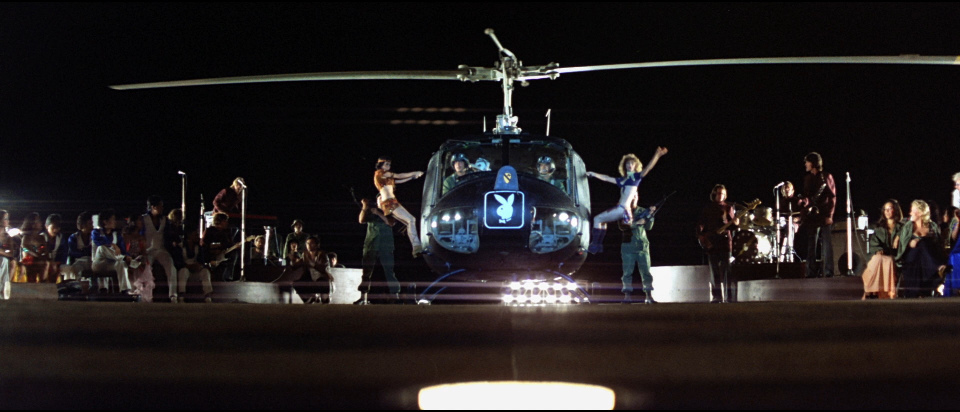
(1979/USA/dir. Francis Ford Coppola)
A wild, hallucinatory ride whose nihilistic worldview fuses Coppola's megalomaniacal grandeur, Milius' militaristic bravado, and Brando's mad insights.

(1975/UK/dir. Stanley Kubrick)
Certainly a close contender for the most visually stunning film of all time, at least the most visually stunning landscape film (though actually its candlelit, NASA-lensed interiors are the equal of those exquisitely exposed hillsides). The last time Kubrick would take his camera so far afield.
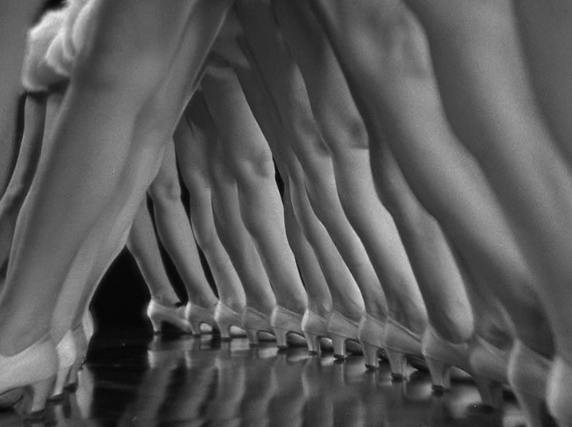
(1933/USA/dir. Lloyd Bacon, chor. Busby Berkeley)
The perfect backstage musical, capturing all the sweat, tears, and sexual tension and transforming them, through some kind of cinematic alchemy, into the most dazzling, inventive (and truth be told, theatrically impossible) musical numbers of all time...at least until the next Berkeley film.

(1946/USA/dir. William Wyler)
Quietly moving, this film deftly mixes the melodramatic traditions of Hollywood with a newfound sensitivity to postwar reality and realism, from the textured characterizations to the evocative small town setting to the deep-focus photography of Gregg Toland (leading to some brilliant compositions).

(1966/France/dir. Robert Bresson)
My first real "holy grail" film; after waiting five years, I was able to see it and was, inevitably, disappointed. Yet over time, almost out of that disappointment, I came to love it. Because Balthazar never asks for our sympathy, the film skirts sentiment and becomes perhaps the most authentically sad film ever made.

(1954/USA/dir. Alfred Hitchcock)
A movie about watching movies (or perhaps the new medium of television), cleverly disguised. What a marvelous little world was created outside that courtyard window, where romance and mystery unfold under orange skies amidst the bustling hum of the Village.

(1955-1959/India/dir. Satyajit Ray)
From the wondrously naive sensitivity of Pather Panchali to the formal sophistication of The World of Apu, this trilogy represents not only the growth of its protagonist but the development of a great filmmaker from his brilliant debut to his quick mastery of the medium.

(1994/Hungary/dir. Bela Tarr)
Some movies create a world through the use of space, others through time. Satantango uses both, but especially time, luring us into a trancelike ambiance where the mundane and mystical intermingle - movie magic of the most unusual kind.

(1986/France/dir. Louis Malle)
In the Midwest farm town of Glencoe, Malle discovers unique human truths and universal themes: love, loneliness, work, aging, death, family, rebellion, community. The documentary skirts condescension and sentimentality, without falling into either trap - what emerges is a small masterpiece of humanism.

(1957/Sweden/dir. Ingmar Bergman)
Bergman's seventeenth film became his biggest breakthrough and created iconic images which linger still: a squirrel atop a tree stump, a silhouetted dance of death across a hilltop, and of course a game of chess against the sunrise. I love the boldness of Bergman's ambition.

(1975/USA/dir. Steven Spielberg)
The mechanics of the film - its creation of suspense and use of spectacle - still impress, but it's the human drama (and comedy) that keeps me coming back.

(1932/USA/dir. Howard Hawks)
That revelation of Tony Camonte in the barber's chair is a masterpiece of economy - to me, it says everything about the Hawks touch. And Hecht's screenplay is a classic: "Get out of my way Johnny, I'm gonna spit!" sprays "Say hello to my little friend!" with a hail of bullets and leaves it for dead.

(1946/USSR/dir. Sergei Eisenstein)
Lurid and decadent, this is one of the most bizarre big productions of all time. It pulsates with a kind of psychosexual energy, manifested in the craggy, expressionist sets, the distinctive Prokofiev score, Eisenstein's chesslike directorial conceptions, and Nikolai Cherkasov's baroque performance.

(1939/USA/dir. Victor Fleming & George Cukor)
I guess some people don't dig it, but how can you not? To me it seems the essence of Hollywood - glorious colors, larger-than-life characters, an epic story. There's irony too; as Mark Cousins notes in The Story of Film it's an escapist film whose narrative content explicitly condemns escapism.

(1929/Germany/dir. G.W. Pabst)
Nothing can quite prepare you for your first sight of Louise Brooks. She bursts into the room, long sleeves trailing behind her, smiling with a deadly lack of guile. No dramatic buildup is necessary; the force of her personal attraction leaps across the decades and through the screen to lure you to your doom.

(1923/France/dir. Abel Gance)
Through a sense of montage that is more about accumulation than tension, Gance evokes a universe of passion, frustration, violence, and loneliness. With the sensitivity of his direction and the gusto of his technique he transforms potential melodrama into the stuff of Greek tragedy.

(1951/UK/dir. Jean Renoir)
And here we have one of the great dissolves in cinema history - from an older man, philosophizing about how death is a release from the burden of life to a young girl, sunk into grief; thus simply and subtly Renoir undercuts spiritual rationalization with simple human emotion.

(1949/Japan/dir. Yasujiro Ozu)
Every time you see it, something new strikes you - maybe the devastating apple peel at the end, or the crushing weight of the Noh performance (which often strikes Western viewers as tedious at first glance), or the poignant final sleepover at the resort. A film full of little truths that grow on you.

(1939/USA/dir. Victor Fleming & King Vidor)
A movie that, almost by accident, seems to contain everything: a childlike fairy tale, an all-American fable, a political allegory, a psychological code, a psychedelic experience, a dreamy invocation, a quintessence of elusive Hollywood alchemy. Even pulling the curtain on the wizard only deepens the mystery.

(1938/USA/dir. Michael Curtiz & William Keighley)
Lavish Technicolor, giddy swashbuckling, hearty humor, Olivia de Havilland's beauty, Claude Rains' devious charm, Errol Flynn's jaunty swagger - and added to all these attractions, an eccentric plot twist gives Robin a refugee camp to run, bringing him up to date in a world consumed by war and fascism.

(1990/USA/dir. Ken Burns)
Though his approach has become somewhat formulaic since, this immersive, empathetic historical experience still feels fresh. The miniseries constantly makes the period vivid, reminding us, especially through astonishing sound film footage of veterans - that the war was not so long ago or far away.

(1997/Japan/dir. Hideaki Anno & Kazuya Tsurumaki)
Even knowing the preceding anime TV series, it can be difficult to make heads or tails of the avant-garde, apocalyptic imagery cascading across the screen in this feature follow-up. Nonetheless, it remains a mesmerizing visual experience and thought-provoking metaphysical exploration.

(2006/Thailand/dir. Apichatpong Weerasethakul)
A dreamy meditation on the differences between city and country. Halfway through, the film radically transforms its texture, switching from the warm greens of a rural clinic to the cold whites of an urban hospital.

(1980/USA/dir. Martin Scorsese)
Part gritty neorealism, part psychodramatic myth, Scorsese fuses disparate historical and cinematic traditions to produce a cold-blooded, hot-headed masterpiece of craft, one of the last great films of New Hollywood. The fight scenes remain expressionistic classics.

(1993/USA/dir. Steven Spielberg)
By choosing an uplifting story about a historical tragedy, and by telling this story in a gripping and entertaining fashion, Spielberg invited criticism - but these potential flaws are also the film's great strengths, along with Ralph Fiennes' mesmerizing, terrifying performance.
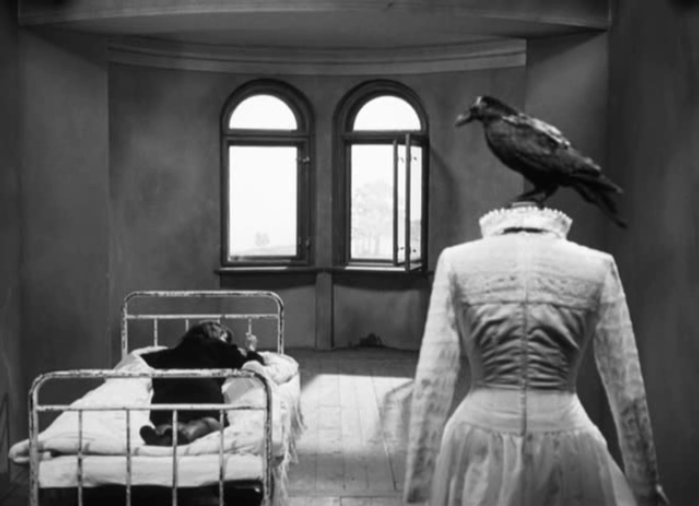
(1967/Czechoslovakia/dir. Stefan Uher)
A poetic Slovakian masterpiece about war, art, and the power of beauty - full of surreal touches, conveyed especially through the movement of the camera rather than aggressive editing or Kafkaesque narrative devices.

(2000/China/dir. Jia Zhangke)
A brilliant depiction of China's rapid transformation from Maoism to capitalism, provincialism to globalism, tradition to rootlessness. Throughout mobile tableaux, little details (a hairstyle, a song on the radio) accumulate until nothing remains the same.

(1974/France/dir. Louis Malle)
On a day like any other, Louis Malle and his camera crew enter a public square and begin filming and interacting with the people they run into. Before long, fascinating stories and amusing personalities emerge: cinematic intrigue naturally arises from the everyday.

(1984/USA/dir. Jonathan Demme)
Through a concert film so carefully (yet subtly) staged as to rival the biggest Hollywood musicals, Talking Heads offers both a captivating performance and a sly narrative about a loner joining a community. David Byrne must be seen to be believed.

(1976/Spain/dir. Carlos Saura)
Ana Torrent gives an incredible performance as a little girl whose resentment of her father leads to a mixture of confused guilt and murderous pathology after he dies. Shot around the time of Franco's death, this is psychological drama with political implications.

(1926/Germany/dir. F.W. Murnau)
Giddy with the inventiveness of its images, this Expressionist classic finds time to both evoke the iconography of the Middle Ages and playfully indulge in pastoral romances and farcical roundelays. The tone shifts repeatedly throughout, soaring through epic, horror, romance, and comedy before its dramatic conclusion.

(1926/France/dir. Man Ray)
Ray captures a fluidity already suggested by his photographs in this experimental short, as objects, people, and abstract images shift and transform before our eyes; anticipating Vertov by a few years, Ray even shows a camera-eye. Self-conscious perhaps, but this is an exercise in pure sensation.

(1976/USA/dir. Alan Pakula)
A moody, evocative thriller, low on violence yet high on tension and atmosphere. Pakula's mazelike sense of intrigue, William Goldman's compelling mind-puzzle screenplay, and Gordon Willis' shadowy photography evoke a tangled world of corruption.

(1968/Japan/dir. Nagisa Oshima)
Caustic, clever, and finally, almost surprisingly, compassionate, Oshima's satirical masterpiece centers on a Korean criminal who, physically, simply can't be executed. Surrealistically investigating and re-enacting the crime, the officials end up implicating themselves.

(1966/Sweden/dir. Ingmar Bergman)
Images and strange dialogue stream forth from Bergman's subconscious, disciplined by two decades of filmmaking experience yet raw with the urge to communicate an elusive experience. Whatever you make of the strange sequences, they carry a kind of dreamlike charge.

(2003/Denmark/dir. Lars von Trier)
Perverse, exhausting, and exhilirating, von Trier's theatrical-yet-cinematic approach & stripped-down sets create a captivating if cruel emotional reality.

(1974/France/dir. Jacques Rivette)
A film that stubbornly evolves its own logic: two young women trespass in a house that seems to exist in a parallel universe - or a parallel movie. They begin to interfere with the drama that unfolds there, abandoning their own narrative to play around in another.

(2003/USA/dir. Sofia Coppola)
Snobby? Self-centered? Perhaps. But is the film as "boring" as its legion of detractors seem to find it? Quite the opposite: I know few movies so absorbing. If you tune into Coppola's frequency, every moment is pregnant with a mesmerizing, melancholy mood.

(1995/France/dir. Mathieu Kassovitz)
A joyride and a cri de coeur, La Haine brilliantly varies between long-take, static-shot dead-time and explosively kinetic camera movements and cuts - the characters' only relief arriving via confrontation with the cops or the sonic deliverance of hip-hop.

(1979/Spain/Jaime Camino)
This documentary on the Spanish Civil War is mostly talking heads - yet somehow this only adds to the fascination and the human drama. The title is Spanish for "that old memory" and, watching these faces forty years after the main event, it's as if we are digging through the sands of time, excavating what remains of the truth.
Many of these films were featured in my video series. Visit Cinema in Pictures to browse video clips by title.


26 comments:
What! No Ben-Hur (1959)! Just kidding. I like your list, and I'm glad to see Lawrence way at the top where it would be for me. (Vertigo too.) Did you see The Artist? All sorts of tributes to Vertigo there.
I haven't seen The Artist or, truth be told, many 2011 films at all (just Drive, Tree of Life, and Cave of Forgotten Dreams - but not even in 3D! The Melancholia screener still waits by my TV).
Ben-Hur would probably be on a top 500. It has its issues but I've always been fond of it, and I've heard it's absolutely fantastic on a big-screen (as a kid I only had
If you like Vertigo, stay tuned. It keeps getting postponed but as I'm taking a break from the blog with the New Year, I'm under the gun right now - so my review of Vertigo should go up within a matter of hours...
*(as a kid I only had a modified full-frame VHS copy, where all the characters ended up looking like Stretch Armstrong, but it still captured me)
Hey, I just want to say, this is an awesome list! I certainly have a few points of disagreement with you (I saw Day of Wrath recently and couldn't get into it, what the frick is Easy Rider doing so high?, outside of a couple of scenes Pat Garrett sucks, Raging Bull is so much better than Goodfellas, where's Terrence Malick or Sunrise?), but these are made up for by so many points of agreement and appreciation.
I couldn't put Meshes of the Afternoon so high on my won list, but I'm very glad you can, and I admire that you've got so many avant-garde films and shorts on your list. Plus I like the fact that you don't skimp on animation, even if I would put totally different animated films on my own list (Red Hot Riding Hood does not deserve a tenth of it's reputation). Also, I want to thank you for putting Young Mr. Lincoln above The Searchers on your list. I love both films and Ford in general, but The Searchers is one of Ford's most imperfect films, and Lincoln one of his most perfect, and I'm glad to see somebody else agrees with me. Top marks as well for the placements of Gofather II over Godfather I, and the high ranking of On the Waterfront, one of my Top 10 favorites.
Also, it warms my heart to see It's a Wonderful Life so high. I just watched it again for Christmas and was overwhelmed by how incredibly great it is, and yes, at this moment, I would put it above Citizen Kane.
Oh, and Kenneth Clark's Civilisation???? You, sir, are my kind of cinephile!
Joel - Glad to hear that about your experience viewing Ben-Hur. For me it was my Star Wars - I saw it on the big screen in 1959 and upon many other occasions, including on the biggest screen I've ever seen at the Wang Theater in Boston; the chariot race made the floor rumble. Now you can get it on a fully restored 50th anniversary DVD or Blu-ray. Even the DVD is amazing for its color and clarity, and, of course, it is widescreen.
Glad you had as much fun reading this as I had making it. It's a nice punctuation point to the year and in some weird way probably my favorite post. At least for the moment.
Ah, the Wang Center. Speaking of Star Wars, I got to see all 3 films back to back there when I was 9. One of my great movie-theater experiences. I wonder if they still do screenings there; I seem to remember more when I was a kid.
Oh and Stephen - out of curiosity, are you British? I ask because I feel like the show is much more legendary in the UK - I only know of it because I stumbled across it by sheer accident in a video store many years ago; but most British people I've talked to know it immediately. One of my happiest accidents...
Nope, not British. A Hoosier, in fact. I discovered it about a year and a half ago through a reference on a political blog, of all things. I looked it up, realized how highly regarded it was, and discovered the entire thing was on YouTube. I watched the whole thing spread out over several months, but I was pretty blown away by every episode. It definitely made me look at history and art differently. I would have bought the boxed set by now if it wasn't like $70. :)
Someday this list will be comprised entirely of Czechoslovak films. Don't fight the inevitable.
Hell, maybe even just Slovakian ;)
Sorry; I'm coming to this awfully late. Just wanted to tip my hat to your taste(s). I have a 23-year-old daughter who would be mightily impressed by your Evangelion inclusion--as am I by the Quay Bros. and Cria cuervos--and many more. Is it too late to chime in? I may be too lazy--laziest man in Knox County (which puts me in the running for laziest worldwide)--but I like the two-sentence blurbs and the crisp, apt images. Jeez, just what I need: another project. Thanks for nothing.
Thanks Paul - this new (for me) approach ended up yielding one of my favorite posts. There is definitely NO time limit on responding with your own list; I was actually kind of bummed nobody else did so. As for Evangelion, I owe that entry to Bob Clark. I know hardly any anime but his work on that series on wonders brought it to my attention. Tell your daughter to stay tuned - I'm going to begin work soon on aseries covering every episode of new. When I finish writing it all I'll unveil it on this site. Btw I'm also planning a series offering still short but more detailed pieces on all the films on this list. Sort of a user-friendly guide to why these films may be worth their time. I'm hoping both series will be up by mid summer though I've got plenty else on my plate too.
'new' shoul read 'nge' ie neon Genesis Evangelion. Still figuring out how to type in an iPhone...
I have always wanted to do a similar post myself. Great capsule reviews and images Joel. An eclectic and varied list that gets points for including something like Emak Bakia. One day I will unleash a similar piece/post and then retire from blogging forever lol...Maurizio Roca
"One day I will unleash a similar piece/post and then retire from blogging forever lol..."
Ha good luck with that - the Internet is like the Mafia in Godfather III, just when you think you're out...
So you decided to do a run-down of your 100 favourite films. This reminds me of the conversation on "favourite vis-a-vis great" that we had sometime back. So yes, its always a safe bet to stick to the former word - because that inherently means you're prefering subjective judgement over objective evaluation :)
As expected from your diverse & eclectic movie-viewing, your list comprises of a number of landmark films. But, there's also a delectable streak of irreverence here. In fact, I'd go so far as to state that, I've rarely, if ever, seen a list that is as diverse as yours - Satantango & Last of the Mohicans in the same space is a pleasant surprise, but a surprise nonetheless :D
And the fact that you've also ranked your favourites, has made it even more interesting.
Suffice it to say a number of my personal favourites, too, feature in your list, as well as a number of films that I haven't watched yet.
Here's looking forward to yet another brilliant & memorable series here at The Dancing Image. Cheers!!!
Yeah, the ranking just seemed necessary to give the list a flow, but it's very very arbitrary (within a few months there were already major rankings I would change - most notably, Barry Lyndon would have moved much higher). But serendipitous as I ended up turning this into a series.
This was definitely one of my favorite posts to compose. By the way, I'm still slowly working my way through your own favorites/best list though lately I've barely had time to check my blogroll unfortunately (the next month is going to be insanely busy, mostly because of work I've assigned myself; ah well, that's how stuff gets done...). But I'm adding to Netflix as I go...
I love posts like these. Unabashedly subjective, electric, fascinating. Your top 100 has influenced me a lot. It's introduced me to a lot of films and filmmakers that I might not have tried otherwise. I think top 100 lists (favorites or bests) are the best way to get people interested in film (or whatever the list is about).
Here is my own top 50 if you're interested.
http://www.imdb.com/list/4GI1P4_9iTk/
I like making lists on IMDb since you can always tinker with it and add to it (something I'll be doing with my list often) as opposed to a blog post which must be a bitch to update. Anyways we got several overlaps (and if you're wondering, Masculin Feminin would be in my top 100).
Thanks, Mike, and great list! Did not realize you were such a big Michael Mann fan. Out of curiosity, what do you think of Manhunter?
I'm in the middle of a bunch if stuff right now (trying to make today as productive as possible to clear my plate from tomorrow forward, and most of all I want to write an anniversary post which I haven't even begin yet!) but I'll return later to read your comments on some of the individual movies there. Looking forward to it.
Thanks Joel. I want to add comments to all of them but some I am finding are really difficult to describe why I love them.
I'm a bit obsessed with Michael Mann. He and Marty are my favorite contemporary directors (which used to be the Coen brothers, but looking back at their films they all seem nasty, lazily cynical about their characters, and painfully unfunny). Funny you should bring up Manhunter, the only Mann film I don't like (Miami Vice I'm lukewarm on). I usually don't care for serial killer movies, and it seemed pretty run of the mill to me. I don't remember much other then I wanted to turn it off during the scene where the killer was stalking the blind girl. Hate manipulative shit like that.
Anyways, yeah, Heat, Collateral, Last of the Mohicans (that score...) Thief, The Insider, Ali, I'm kinda biased haha.
That's quite a turnaround on the Coens - I've found myself on more of a seesaw with them. Initially, their work left me with a bad taste in my mouth: something about it seemed so smug and condescending. I was not a big fan of Fargo.
Big Lebowski was my key into their world - it's one of my favorite movies, and it let me recognize just how satisfying the masterful craft is. When I saw No Country for Old Men I thought to myself "these guys could adapt a phone directory and make it riveting."
Then Burn After Reading tested my patience once again and A Serious Man, I'll admit, basically mystified me. They are absolutely brilliant and admirably controlled filmmakers, without a doubt. As for their sensibility, I'm ambivalent about it. But I'm glad they and it are there to take in.
As for Manhunter, I've only seen it once. I remember finding it a narrative mess but visually gorgeous, especially compared to the very conventional (and somewhat overrated, I think) Silence of the Lambs.
I guess I'm on a seesaw with the Coens too- I mean, I can't deny their talent for directing, even if a lot of their humor is mean spirited and at times it seems as if their films don't come from a sincere place. I don't understand how they could mock their own culture and religion in Fargo and A Serious Man respectively. Maybe they're lovingly mocking them but I fail to see it that way.
I enjoyed The Big Lebowski but didn't find it laugh out loud funny. Oddly enough The Hudsucker Proxy, generally considered one of their weaker efforts, might be my favorite all out comedy of there's. I also haven't turned around on Miller's Crossing yet, and No Country is my 42nd favorite movie of all time according to my list.
Agreed on Silence of the Lambs being overrated.
You have quite an eclectic list here. I see that you have listed just about every genre except for westerns, unless I missed something... which I'm good at doing.
Though not a "real" western, being filmed in Utah, might I suggest you watch Jeremiah Johnson? That one has stuck with me since I watched it as a kid. It combines the surreal with peace, with war and with humor.
It was on Netflix (Double Indemnity, which I'm sure you already know but I'll mention anyway, is in the public domain), but it no longer is. Amazon doesn't have it, but it is available to rent. I'd be happy to gift you enough money, via Amazon, so you can rent it via their Instant Video.
My email address is the same as my username here and at gmail dot com. If you decide to give it a go, let me know your Amazon user name (again, my Amazon name is the same as here, it's my world wide web name, actually) and I'll send a "gift card" with enough to rent the movie, if you would like.
Love your list! A lot of your list would on mine, but I just would order them differently.
That's very generous of you but don't worry, I have seen Double Indemnity! It's one of my favorites but just didn't make the list in 2011. It might in 2015, though! Funny how these things vary depending what mood we're in.
As for Jeremiah Johnson, I hadn't seen it at that time but actually owned it as part of one of those multidisc packs, in this case of 60s/70s Westerns (Wild Bunch was in there too) and have since watched and enjoyed it.
There is at least one Western on the list: The Searchers. Other than that, yeah, it seems like a lot missed the cut, probably just barely. Too Bravo is up there for me as well. And I like many Anthony Mann or Budd Boeticher (sp?) Westerns like Winchester '73 or Ride Lonesome. I always enjoy watching a good Western but somehow I tend to favor other genres, like noir mysteries/thrillers when making lists or buying DVDs. Just down to personal taste I guess. Hmm, in "spirit" maybe Last of the Mohicans could be considered a Western...even though it's set in New York haha.
Thank you for dropping by to read this. Always encouraging to see older posts get some attention. Hopefully in August I will be resuming my Favorites series, in which once a week I do a capsule review of a film on this list. I'm a little behind on my backlog (I like to have these things written way ahead of time to avoid pressure) so we'll see...
Oh wait there is one other Western: Pat Garrett & Billy the Kid. Also & I guess due to the time period and the frontier nature of the town maybe Young Mr. Lincoln could be a "Midwestern"!
(That should say "Rio" Bravo not "Too" Bravo - phone autocorrect strikes again...)
Post a Comment